

Introduction
As deposit return systems spread in Europe, the reverse vending machine used to collect used drinks packaging becomes more important. Choosing the right machine is not only a comparison of purchase price or enclosure design. Fit with the scheme in the target country, collection capacity, ease of service, software integration and long-term operating cost should be reviewed together.
This guide is for businesses planning an RVM investment in Europe, so they can assess manufacturers and suppliers with a clearer brief. It is a technical buying frame for retail chains, deposit scheme operators, municipalities and system integrators looking for a recycling machine.
Assess the country’s deposit scheme before the machine
Deposit return system (DRS) requirements can differ from one country to the next. Accepted PET bottles and metal cans, barcode or packaging identification, fraud controls and data-reporting rules should be clear before a purchase decision.
The EU Packaging and Packaging Waste Regulation 2025/40 is an important regulatory frame. National implementation, the scheme operator’s technical conditions and current national law still have to be checked separately. A machine that works in one country should not be assumed to work in another.
Set capacity from real use, not from a catalogue figure
A neighbourhood store, a large supermarket and a municipal collection point do not need the same capacity. Average daily volume matters, and so does the number of returns expected at peak hours. Acceptance speed, internal storage, compaction, emptying frequency and the floor space the machine occupies should be reviewed together.
A machine that is too small can create queues and extra staff time. A system that is larger than needed can raise investment and operating cost. Ask the supplier for capacity tests run with the actual packaging types.
Look at recognition, safety and the user
An RVM may use barcode reading, size and shape checks, weight verification and other sensors. The supplier should explain how valid packaging is recognised, how unsuitable packaging is rejected and how a repeated return is blocked.
For the user, insert height, accessibility, on-screen guidance and transaction time matter. Service access, electrical safety and conformity with the relevant European machinery rules belong in the technical review. A CE mark on its own is not proof of every system compatibility; ask for the related technical documents.
Ask about software integration and data
A modern return machine is also a data system. Connection to deposit platforms, transaction records, remote fault diagnosis, fill-level notices and operations reports should be reviewed before purchase. API or other integration options, data security, access rights and who owns the data should be clear in the contract.
For businesses with several sites, central monitoring can support continuity by showing full bins and repeating faults early. Do not assume these functions exist. Ask the manufacturer for a live demonstration and documentation.
Look at total cost of ownership, not the purchase price
Total cost of ownership (TCO) includes the machine price plus installation, site preparation, power, connectivity, cleaning, consumables, scheduled maintenance, spare parts, software services and possible downtime. RVM maintenance belongs in that figure.
Ask the manufacturer, in writing, for the service schedule, the list of parts that change often, warranty scope, response times and which tasks a local technician can carry out. In Europe, access to service can matter as much as the first investment.
Compare suppliers on the same technical criteria
Scheme fit: Does the machine meet the target country’s deposit scheme and data requirements?
Capacity: Are hourly acceptance speed and storage capacity confirmed by tests?
Recognition: Which containers are recognised, and how are invalid returns blocked?
Software: What remote monitoring, reporting and integration options exist?
Service: How do maintenance intervals, spare parts and the service process work?
Regulation: Which conformity documents and technical files can be provided?
Cost: How is the three-to-five-year total cost, including installation, calculated?
Consider OEM production and a longer partnership
Machine brands and system integrators in Europe may look at OEM or contract manufacturing as projects grow. When working with an RVM manufacturer, price is only one point. Engineering, quality control, consistency in series production, part traceability, intellectual-property terms and after-sales responsibility also matter. Production scope and who is responsible for technical conformity should be defined in the contract.
Talk to AKE Çevre Teknolojileri
AKE Çevre Teknolojileri works in environmental technology and recycling equipment. Organisations reviewing deposit return solutions for Europe can share the machine type and technical requirements with AKE and discuss a suitable approach, including a possible manufacturing partnership.
For a first conversation it helps to share the target country, the deposit scheme, the packaging to be accepted, estimated daily volume, the installation space, software integration needs and the planned timetable. Product specifications and the scope of services AKE can offer should be confirmed by AKE for the project.
Sources
- European Union, Packaging and Packaging Waste Regulation (EU) 2025/40: https://eur-lex.europa.eu/eli/reg/2025/40/oj/eng
Frequently asked questions
What is a reverse vending machine (RVM)?
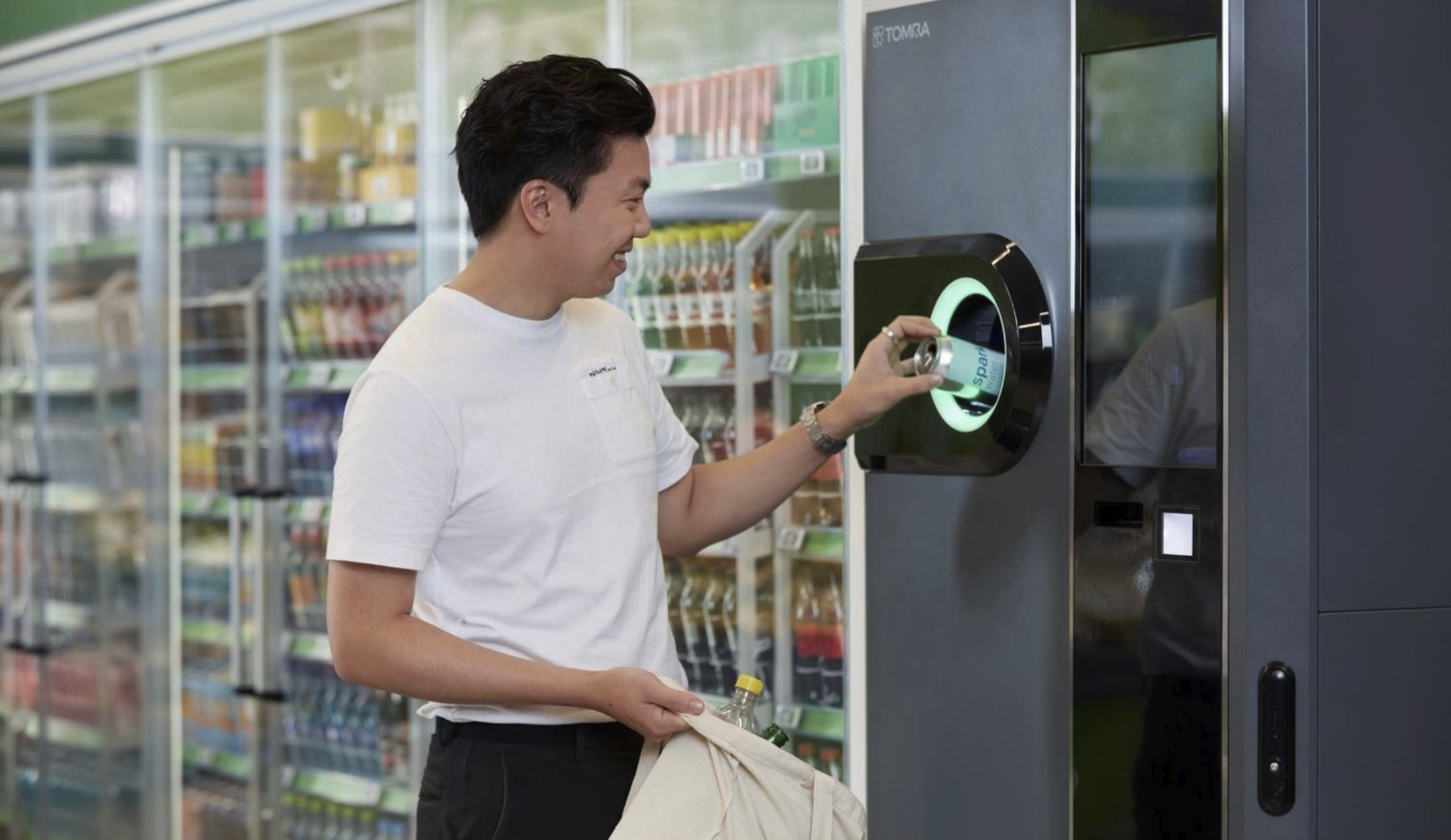
It is a machine that automatically accepts suitable used drinks containers, records the return under the relevant deposit scheme, and can support a refund or voucher process.
Can the same RVM be used in every European country?
Not always. National deposit rules, packaging databases and reporting interfaces can differ. Compatibility has to be confirmed country by country.
What matters most when choosing an RVM?
Fit with the deposit scheme, proven capacity, reliable packaging recognition, service access, software integration and total cost of ownership.
Can an RVM be built under an OEM model?
It can, where the manufacturer’s engineering, production and conformity capability has been verified. Scope and responsibilities should be set in the contract.
Review your technical brief with AKE
Share the target country, packaging types, daily volume and software needs. A suitable deposit return machine, and any manufacturing partnership, is reviewed per project.